Preserving Spring Blossoms
A guide to capturing the fleeting aroma of spring flowers with salt and vinegar. And announcements on spring workshops.

Hello friends,
I sent out a brief inquiry on Instagram asking if people would be interested in my methods for preserving flowers, so I thought I’d share a method that I love and use often at the restaurant. I learned this technique for making shiozuke sakura or the Japanese method for preserving young cherry blossoms a few years ago, and last year I started applying it to all kinds of flowers. It works well with aromatic leaves as well; last year I preserved fig leaf, shiso, and black currant leaves, and they retain their aroma and structural integrity to date.
The technique is relatively simple and adaptable; using salt and vinegar helps to preserve blossoms while trapping some of the volatiles that are extremely important in floral aromas. If you’ve ever dried blossoms or bought dried flowers for tea, you’ll notice that their flavor is much more subdued compared to the fresh versions of themselves. As a fermenter and non-chemist, I’ll get into the technical details about why I think this technique works so well, but the main advantage to this preservation technique is that you can preserve the whole flower while retaining and enhancing much of its original aroma. Essentially, you’ll be turning blossoms into a bright, salty-sour accent perfect for food or drinks. Floral flavors can often be off-putting as food if their aromas are too reminiscent of soap and perfume, and the additional use of salt and vinegar anchors them firmly into the tongue as something you might actually want to pop into your mouth. Think of them as wild floral capers.
Preserving Flowers with Salt and Vinegar
The Method
1. Harvest blooms on a dry and sunny day, preferably with young blossoms that have just started to open. The more pollen they contain, the better.
2. Coat them in 20% of the flower’s weight in salt and press them for 2-3 days in the fridge. At the restaurant, I use a vacuum-sealed bag, but at home, you can use two stackable containers (glass jars or plastic food storage containers work) or a plastic bag with the air sucked out to press them.
3. Drain any excess moisture from the blooms and add in a small amount of vinegar mixed with 8% salt, or ume su (the liquid brine leftover from making umeboshi, often flavored and colored with red shiso) if you can get your hands on some. I used just enough vinegar or ume su to keep the flowers wet in a vacuum-sealed bag.*
* If you don’t have a vacuum sealer at home, you can easily do this with a plastic baggie, pressing out all the air so the vinegar has good contact with the flowers. Or a jar with another jar that fits flush inside. You don’t want to use too much of your pickling liquid of choice, since the floral flavors will infuse into the liquid rather than stay in the blooms themselves. Press the flowers again and wait 2-3 days more in the fridge. If using a baggie or a jar to press the flowers, make sure to give the blooms a gentle mix every day so the salt gets around and presses the flowers evenly.
4. Drain the blossoms, being careful not to break them up as you gently divide the mass of wet flowers into individual pieces. Dry them lightly in a dehydrator or oven with the fan setting only so they’re still damp to the touch. They should not be dripping or pooling liquid, but still moist.
5. Store them buried in layers of salt in a jar or vacuum-packed and left in the fridge. Enjoy your floral capers by lightly swishing them in a small bowl of water so the excess salt comes off.
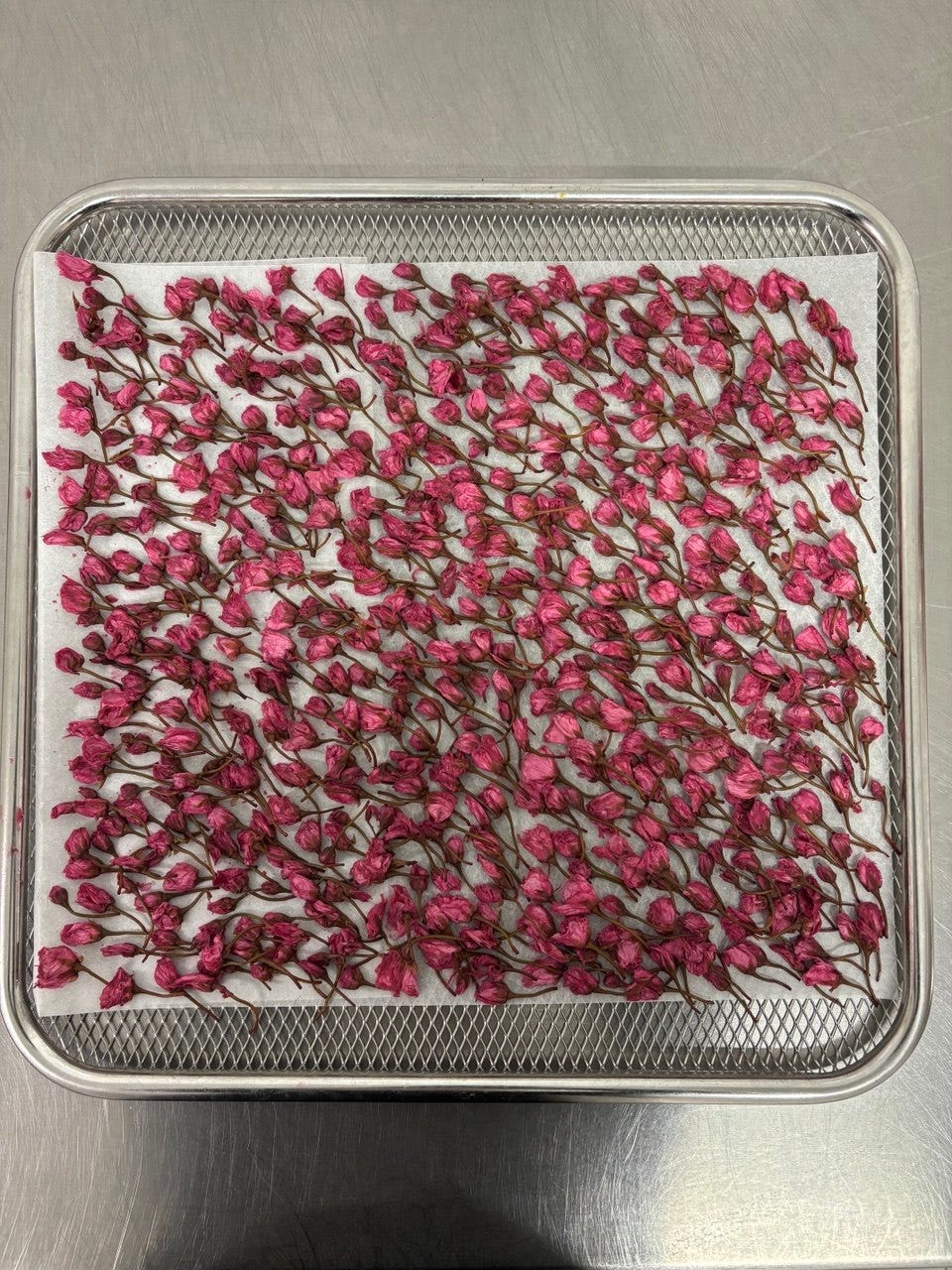
Tips
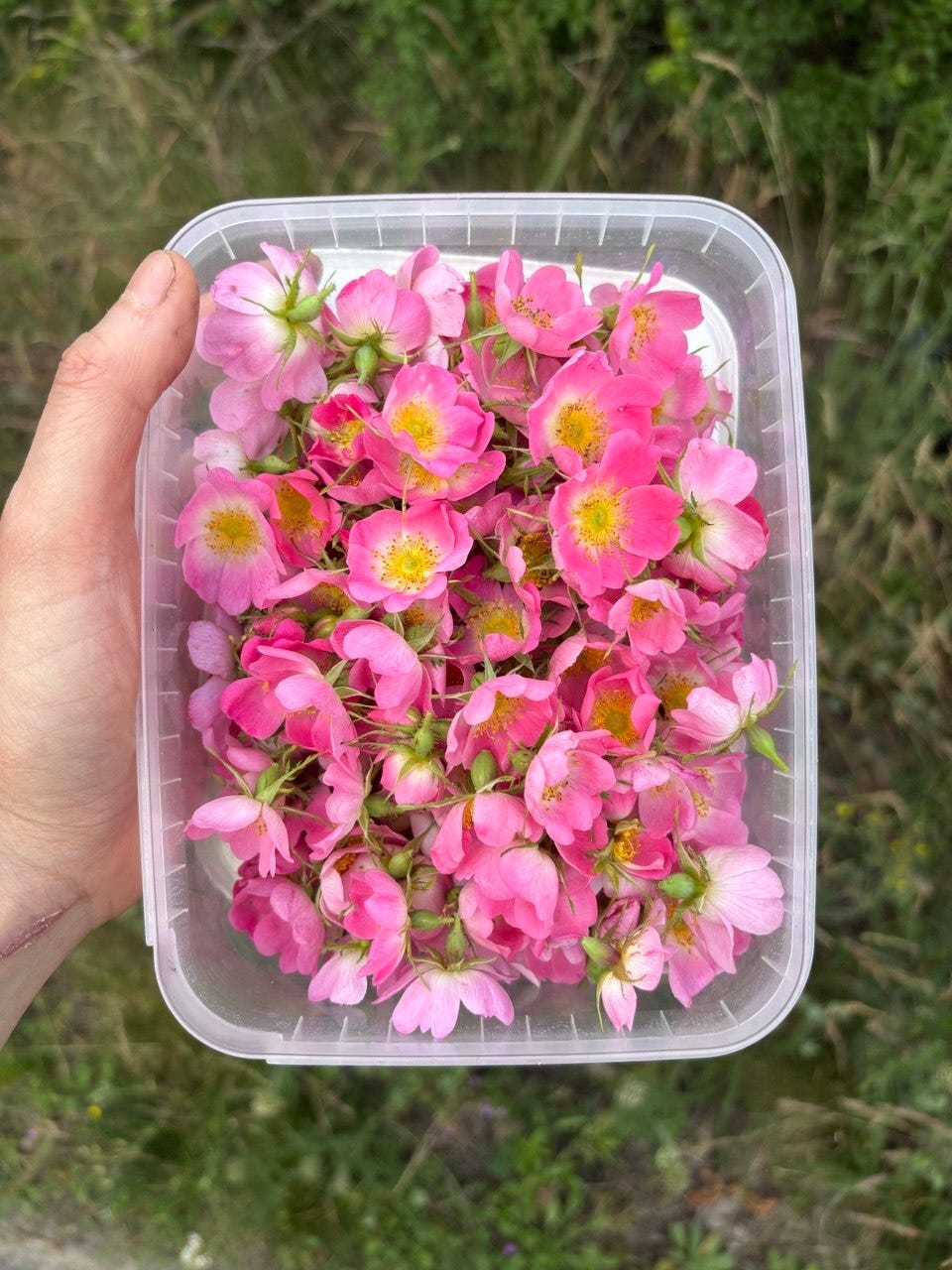
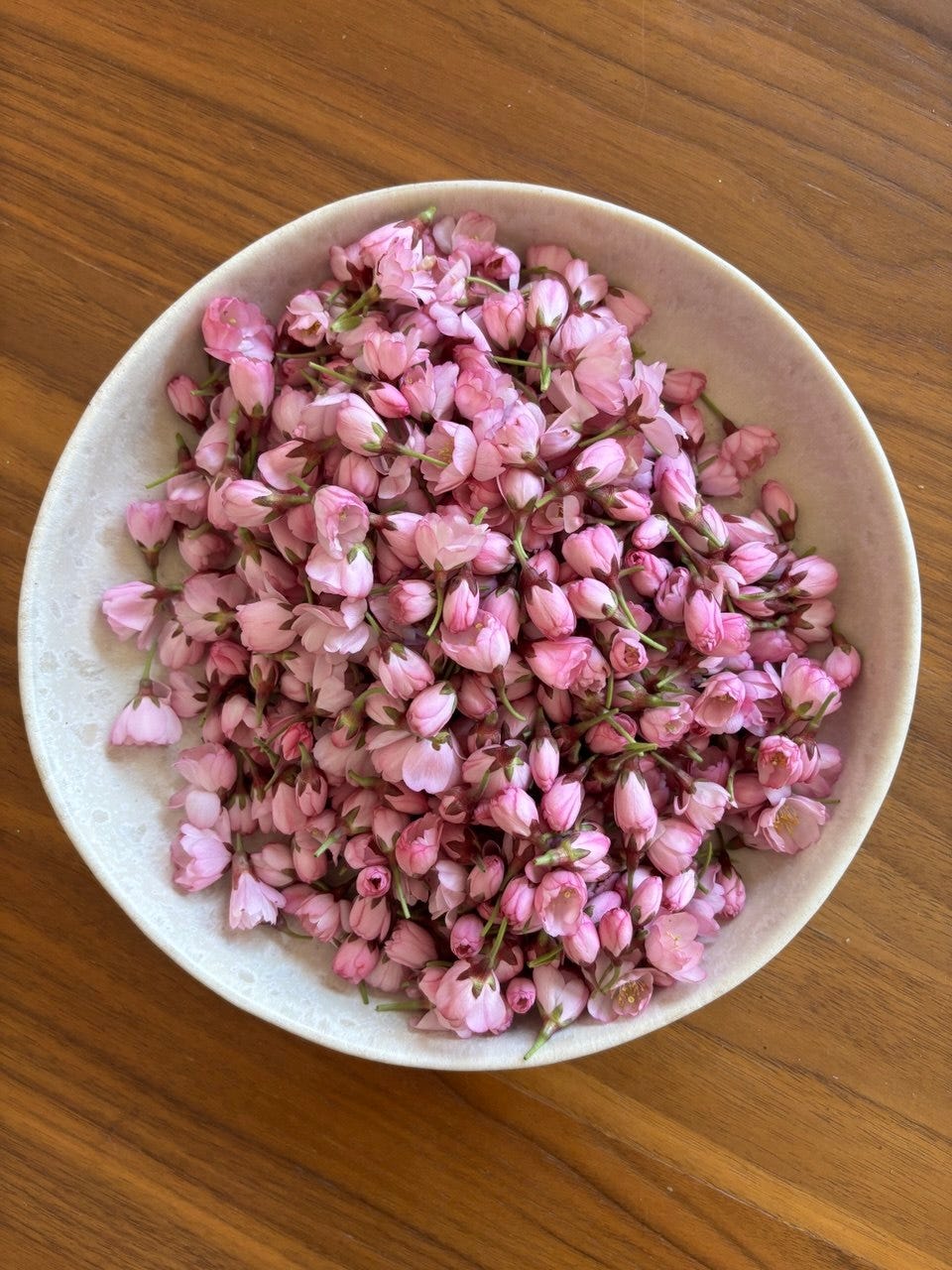
Know your flower. With any flower you choose, it’s important to pick it when the flower is just beginning to open, when the petals are still tightly attached to the calyx of the flower. This is usually when the blossom is also at its peak aroma, full of pollen if picked on a sunny, dry day. Avoid using extremely delicate flowers: if the petals come off easily just by brushing your fingers across them, they’ll fall off during this process, and you’ll end up with stems and pieces of petals. Flowers that oxidize extremely quickly, like magnolia, might also be less ideal for this process, as they will turn completely brown. I’ve tried this with young cherry blossoms and elderflower that were only partially bloomed, with excellent results. Last year, I also salt-preserved wild rose, removing the calyx entirely since the rose petals were quite substantial on their own.
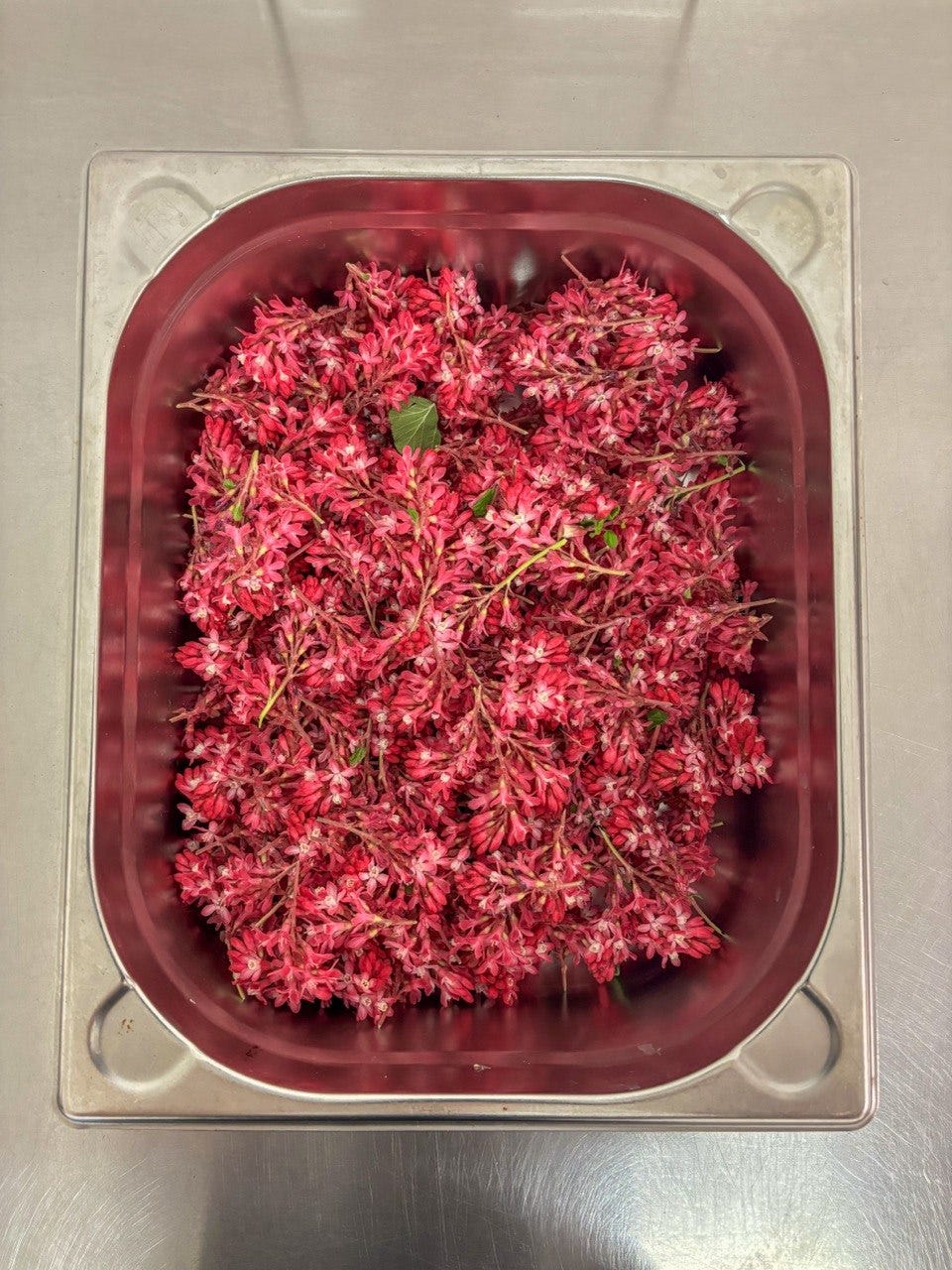
Work with the color of your blossom. In the shiozuke process for salted cherry blossoms, ume su is often used because it contains red shiso, which acts as a strong and non-oxidizing natural colorant. If using vinegar, you could also infuse red shiso directly into the vinegar to the same effect. This is perfect for sakura cherry blossoms, as their light pink color will fade to pale and light brown if you don’t boost their color. A hint of red shiso will restore them to their natural shade and flavor them gently. When I preserved elderflower, instead of ume su, I used a light-colored pear vinegar and colored them lightly with gardenia fruit pods (you can also use turmeric) to keep them pale yellow.
Save the salty floral vinegar. You can freeze it and use it next year for the same process, with a more concentrated floral flavor.
Why it Works
I want to start by saying that I’m no food scientist or chemist, so please take this reasoning with a bit of salt (or feel free to correct me if you know better!).
High salt content prevents microbial fermentation. At a little under 20% salt, the flowers are salt-preserved, with much of their initial water removed in the first press. Much of their structural integrity is preserved if there is little to no fermentation breaking things down.
Using low-pH liquids like vinegar and ume su further limits microbial fermentation. Additionally, if you use vinegar, the acetic acid in vinegar has nonpolar and polar ends, which help bind to aroma compounds, making it a much better solvent for extracting flavor than water alone. Foragers often make floral vinegars as an excellent way to capture their fleeting aromas.
Storing preserved flowers in salt helps retain volatile compounds. Volatiles are, well, volatile. They easily vaporize at room temperature. Storing wet flowers in salt simply helps trap some of those fleeting floral aromas between grains of salt. The longer you store the flowers, the less flavorsome they will become. This is also why I store them in the fridge in a sealed bag or container, to lower the temperature and slow the rate of evaporation.
Spring Classes are now open for registration!
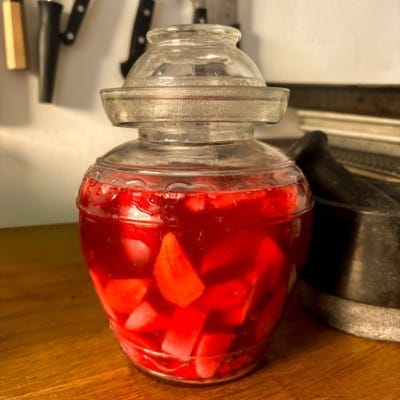
Sichuan Cooking & Infinite Paocai Pickles
Sunday, May 3rd
16-19hr
Due to popular demand, Xueci aka Chill Crisp and I are offering a second session of our Infinite Paocai Workshop. Learn how to make a staple ferment of every Sichuan household, and how to incorporate it into a classic Sichuanese dish, Fish Fragrant Eggplant (鱼香茄子).
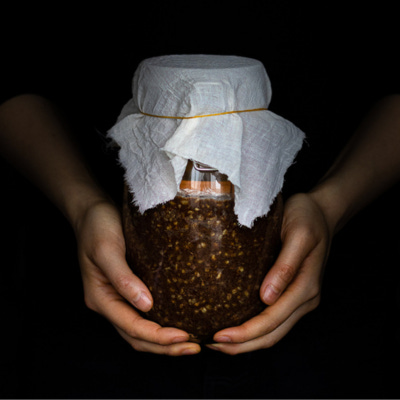
Miso Workshop (Few-Flowered Leek Edition!)
Sunday, April 26th
15-18hr
To switch things up on our beginner Miso Workshop, we’ll be making a contemporary chickpea miso with the option of adding few-flowered leek to it. We’ll still be going over all the classic styles of Japanese miso and you’ll come away with an idea of what makes style of miso different, how to use each variety, and take your own jar of allium-flavored miso to use at home.